RiseWell
Your go-to app for building healthy habits and prioritizing well-being.
Say hello to your best self, one habit at a time!
Role
UI/UX Designer
Timeline
4 Months
Project
Academic Project
What I did
UI Design, UX Design, Prototyping, Recruiting Users, Usability Testing.
Tools used
Figma, Miro
Link to Prototype
The Problem
Many individuals depend on their morning cup of coffee for an initial energy boost, but struggle with focus and productivity once the caffeine wears off.
There is a lack of awareness regarding the negative effects of consuming caffeine immediately upon waking, impacting overall well-being.
Difficulty breaking the habit of a first-thing-in-the-morning coffee routine and lack of motivation to take actions.
The Challenge
How might we reduce the habit of consuming caffeine first thing in the morning by encouraging gradual behavior change through habit formation, helping individuals who want to improve their energy levels and build healthier daily routines?
The Solution
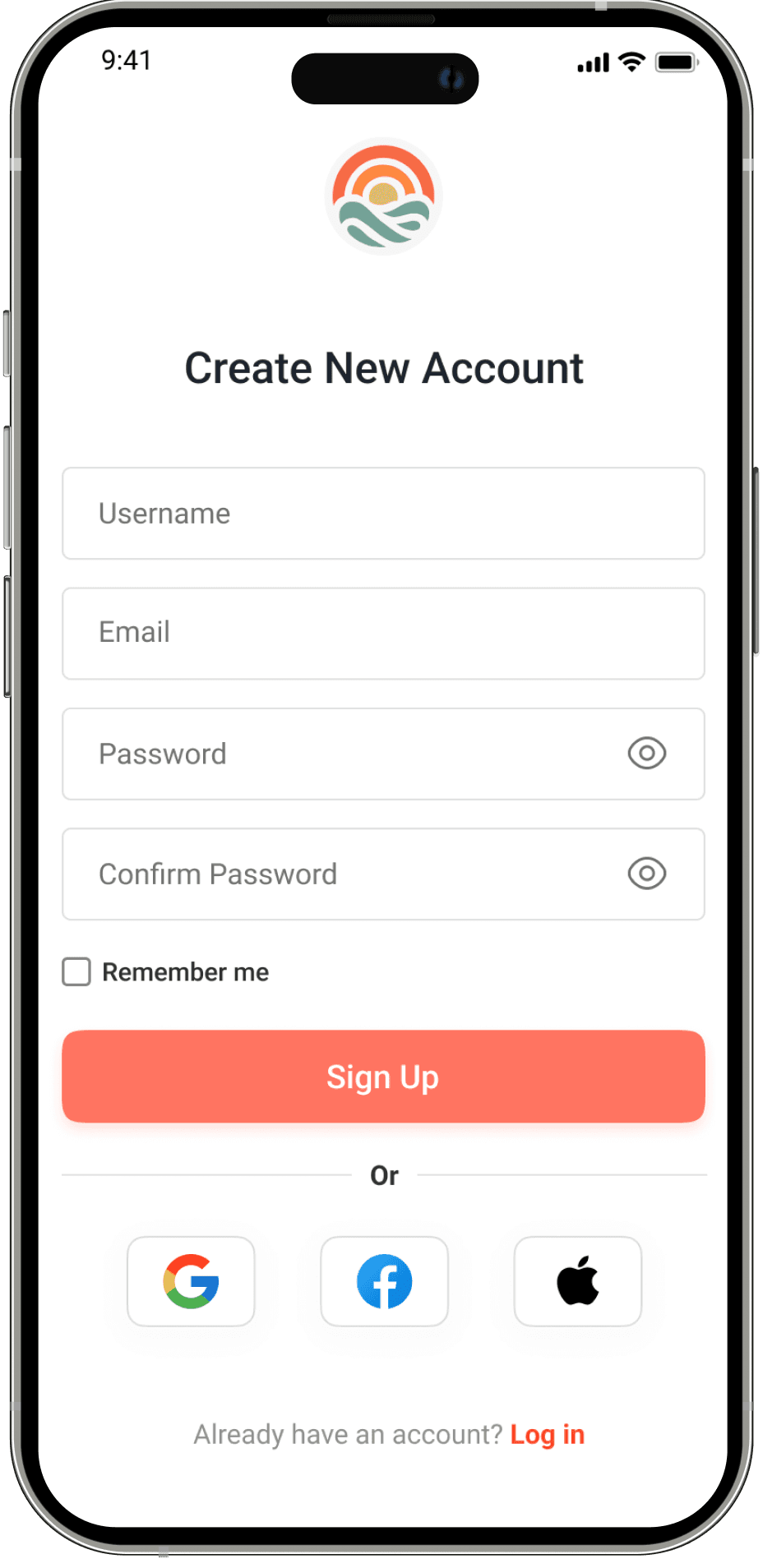
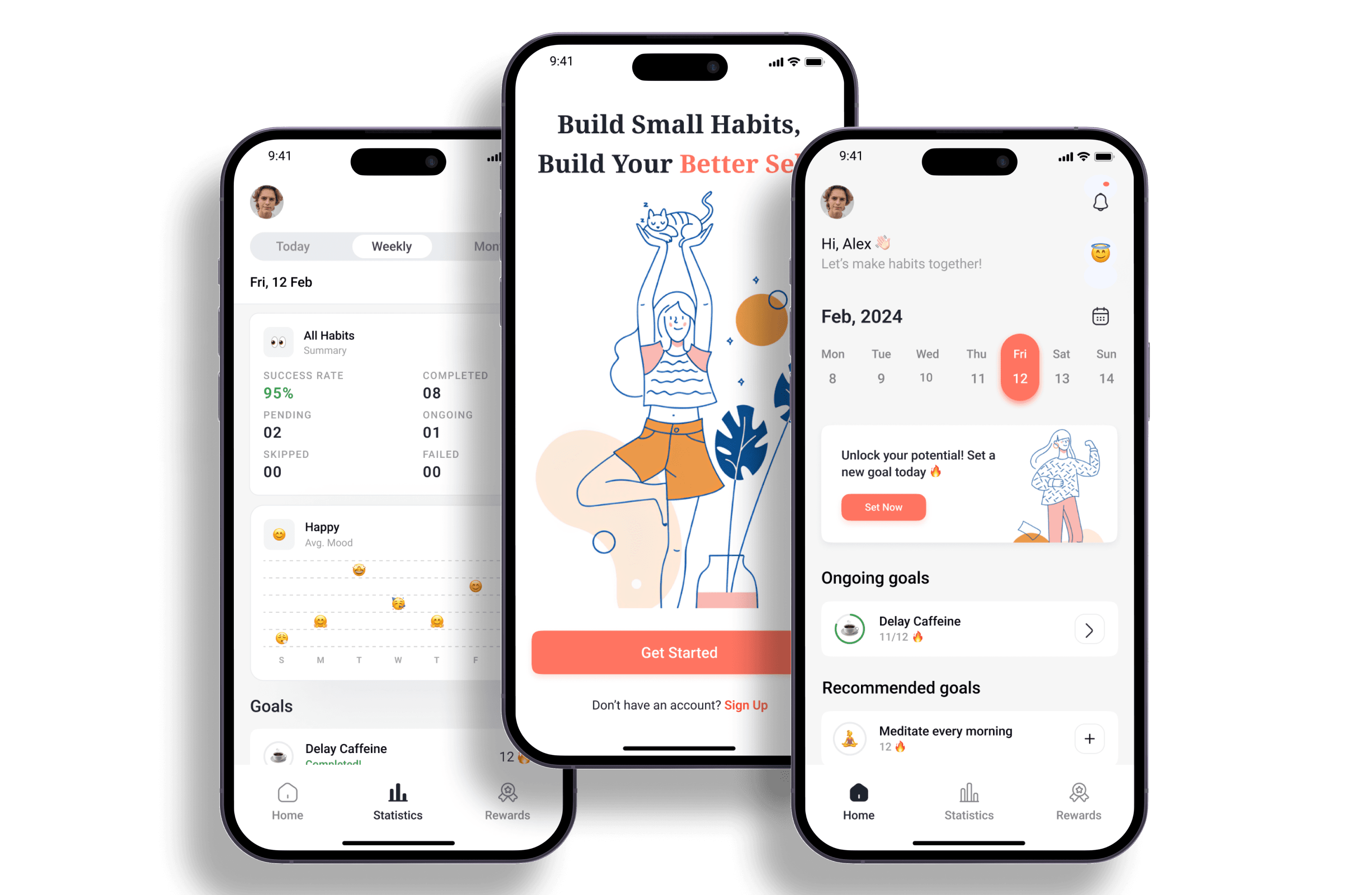
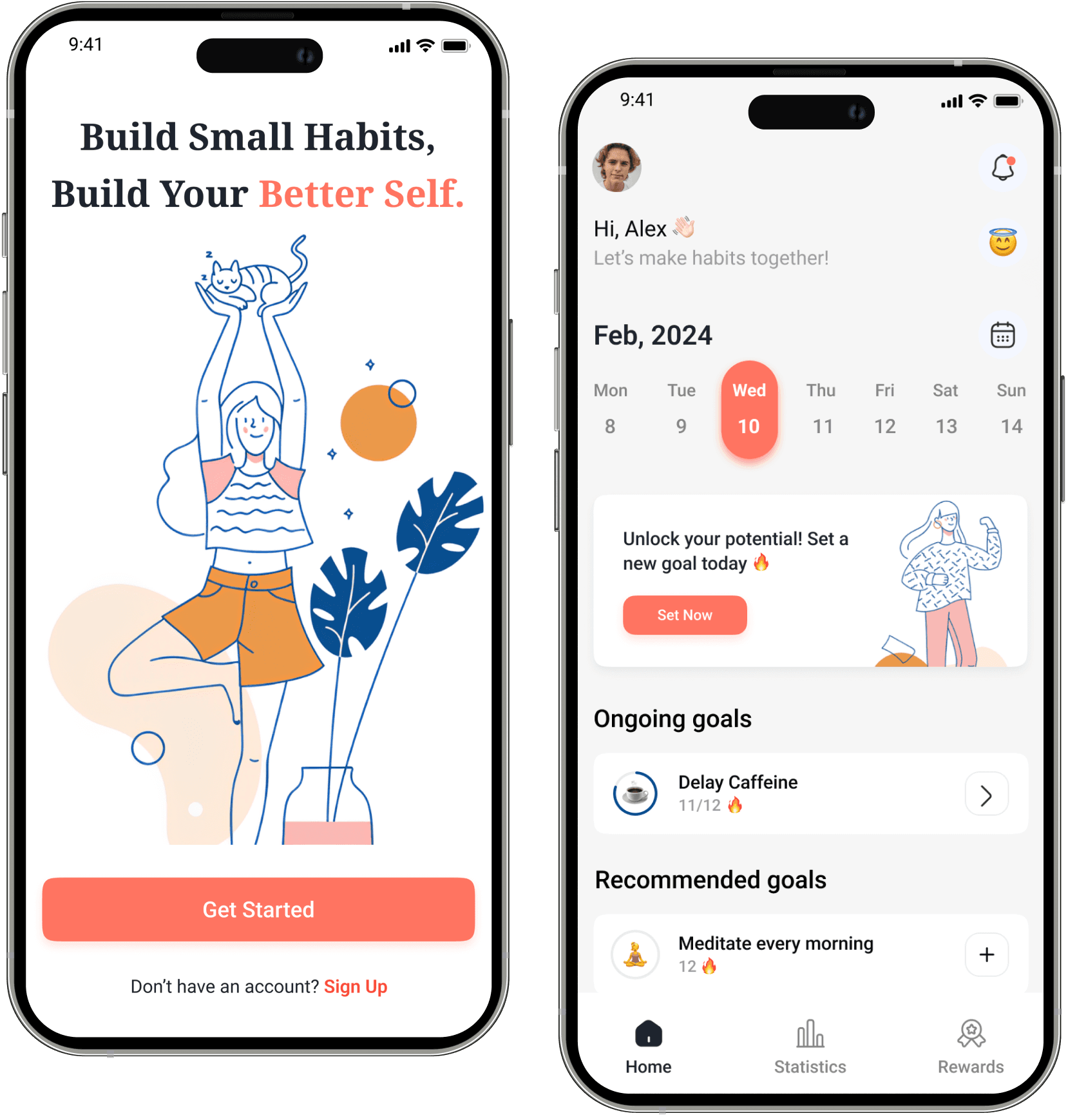
RiseWell is a wellness morning routine app aimed at empowering users to cultivate healthier habits, including delaying coffee intake, using modern technology.
Inspired by Nir Eyal's "Hooked Model," RiseWell incorporates triggers, actions, rewards, and investments to foster engagement and habit formation.
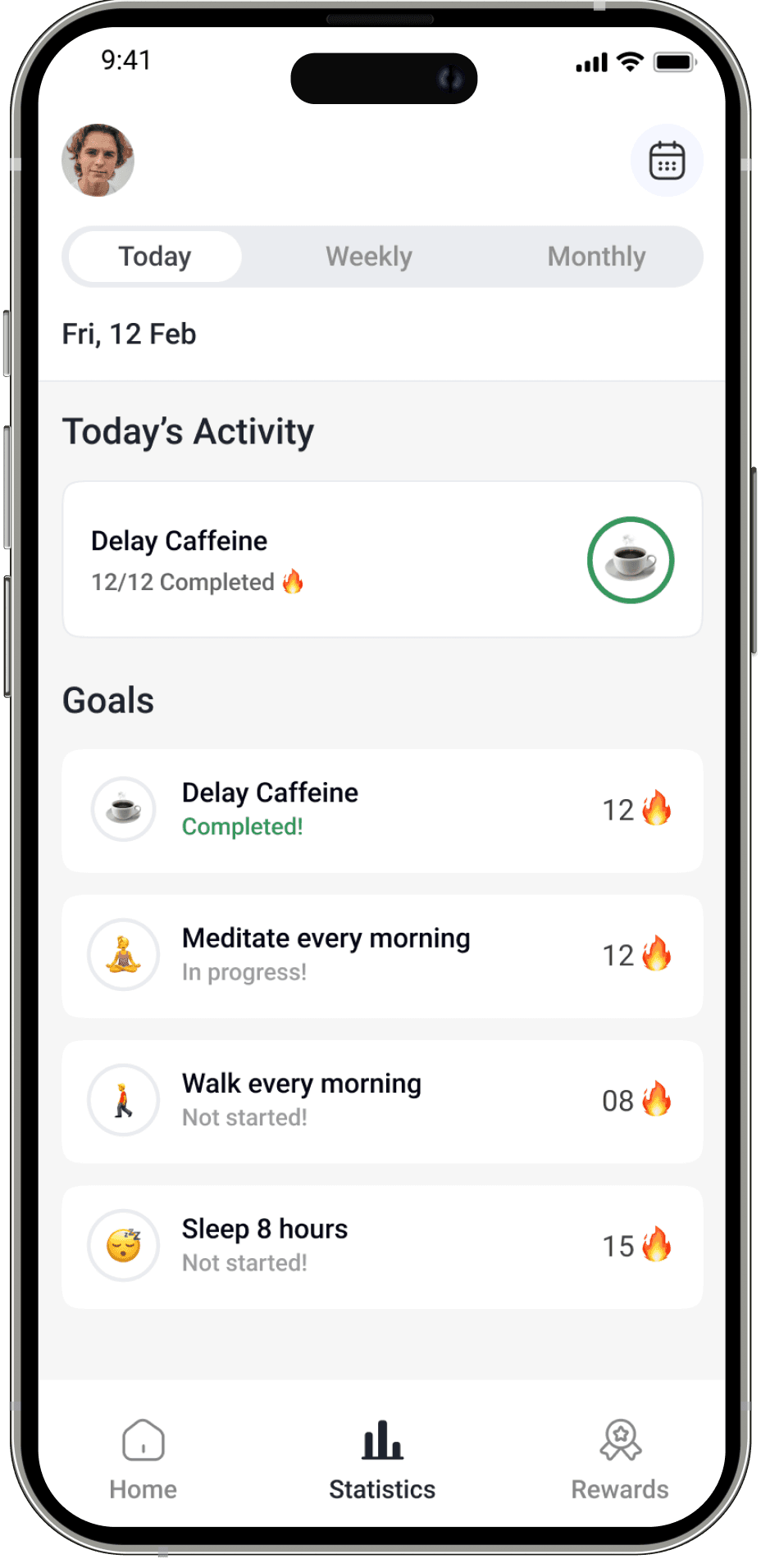
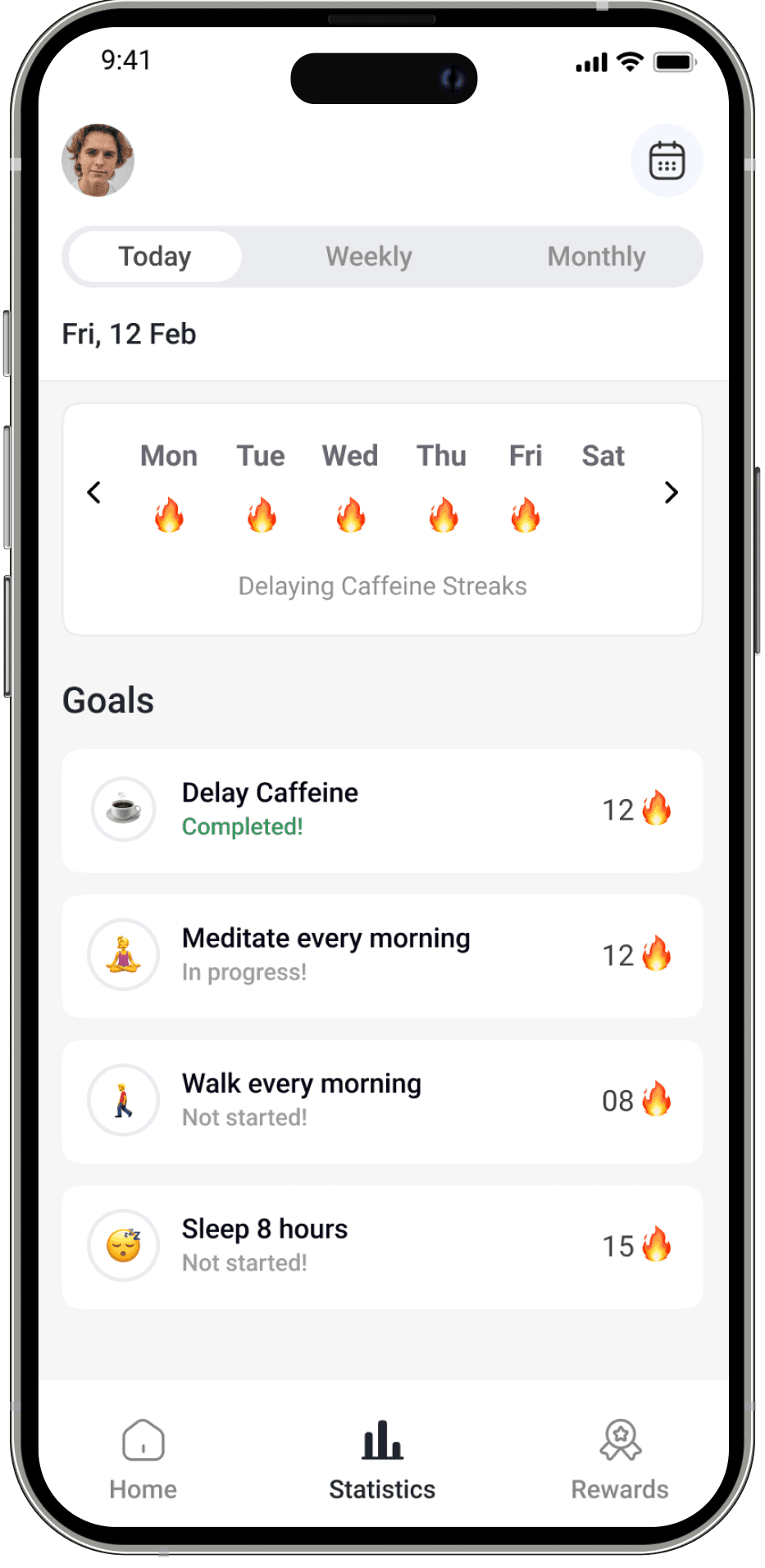
With features like setting personalized goals and tracking progress, RiseWell helps users achieve their wellness goals and simplifies integrating healthy practices into their daily routine.
Design Process
Ideation
In collaboration with my peers, we analyzed common actions in day-to-day habit-forming applications, identifying key behaviors and patterns, and synthesized our findings into an affinity map. This map visually connects all four stages of the Hooked Model, ensuring a cohesive and strategic approach to habit formation.
Hooked Model
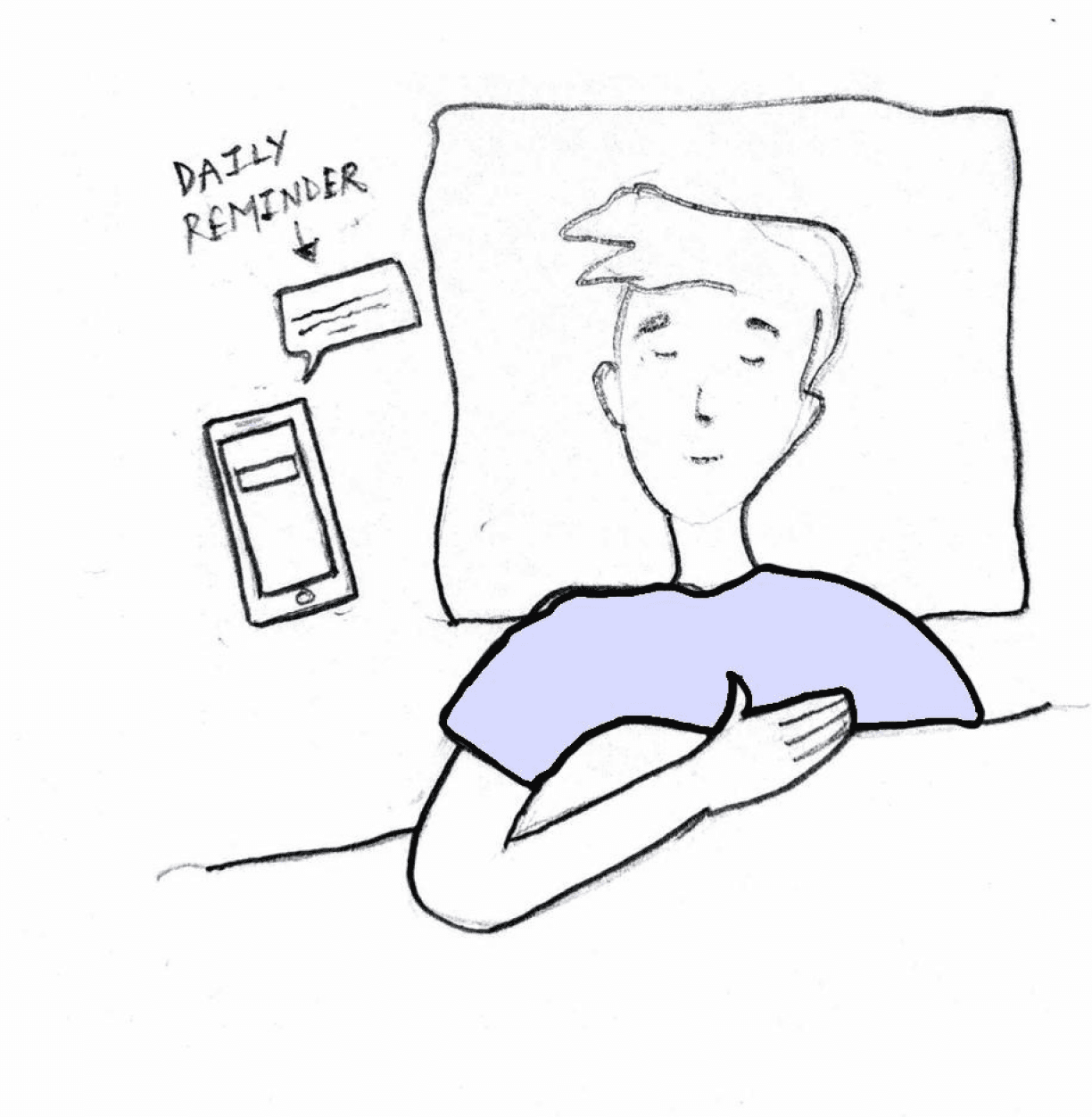
External Triggers: Push notifications reminding users to delay their morning coffee.
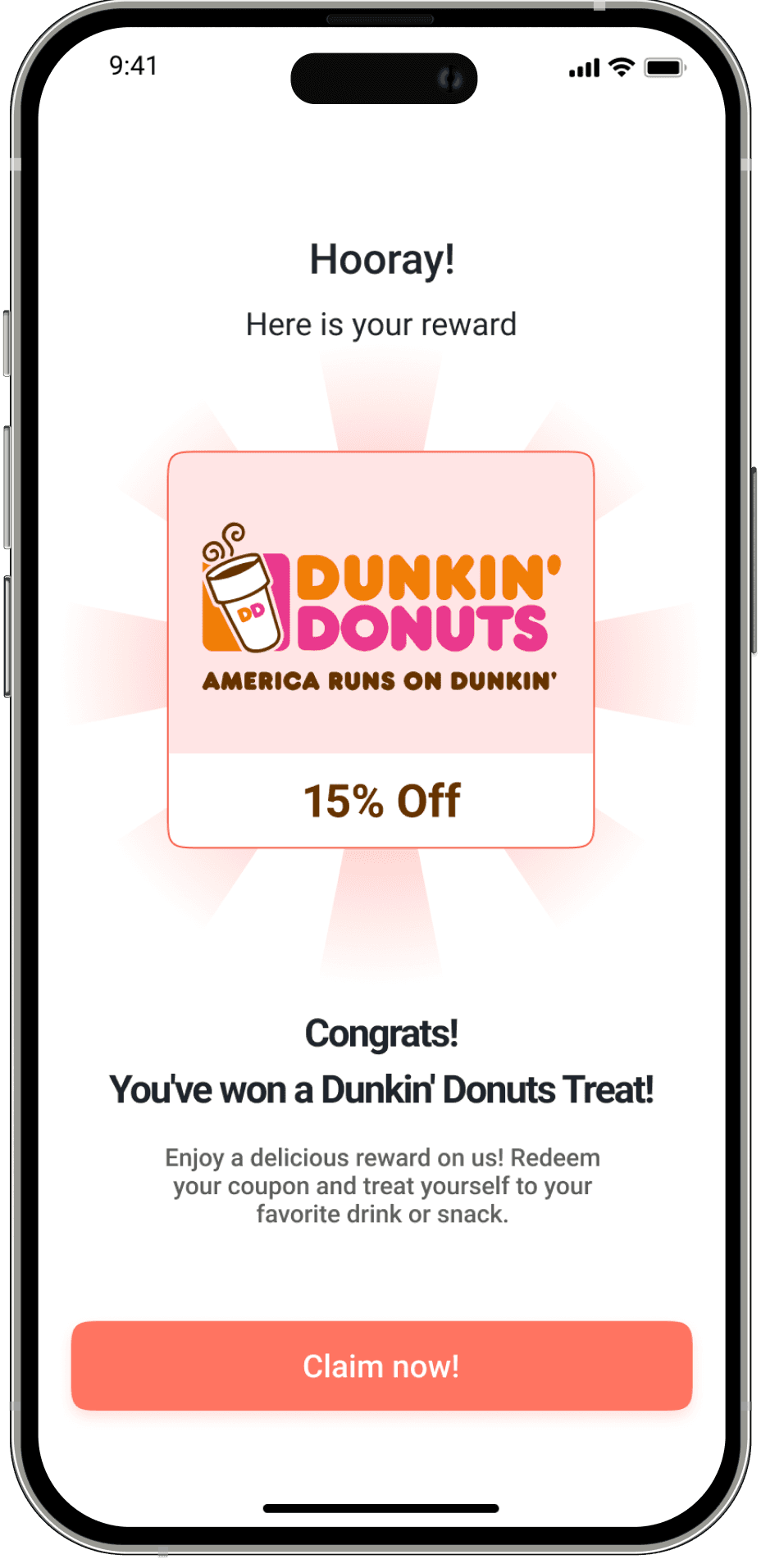
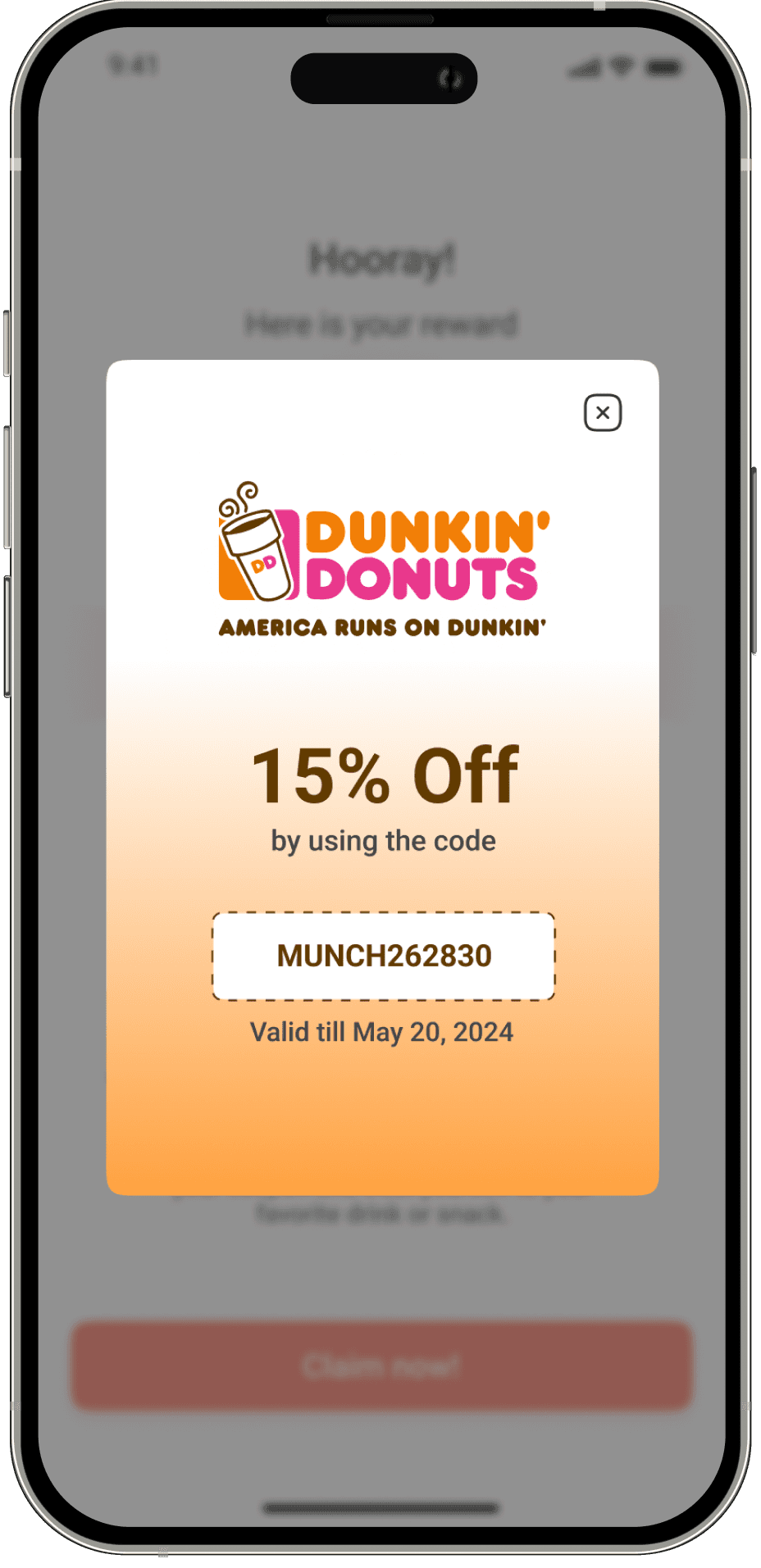
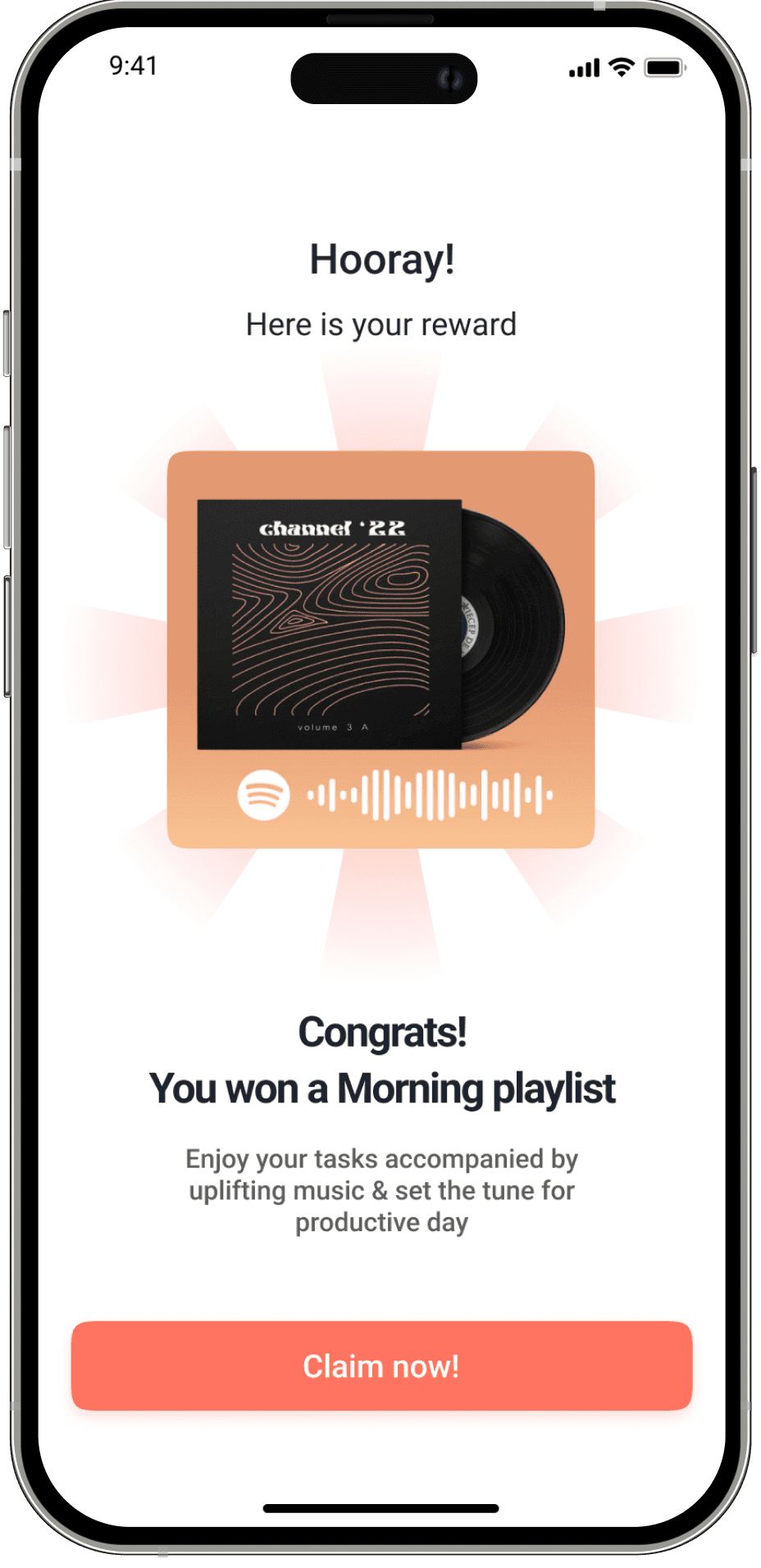
Unlocks reward on completing goals-Discount coupons.
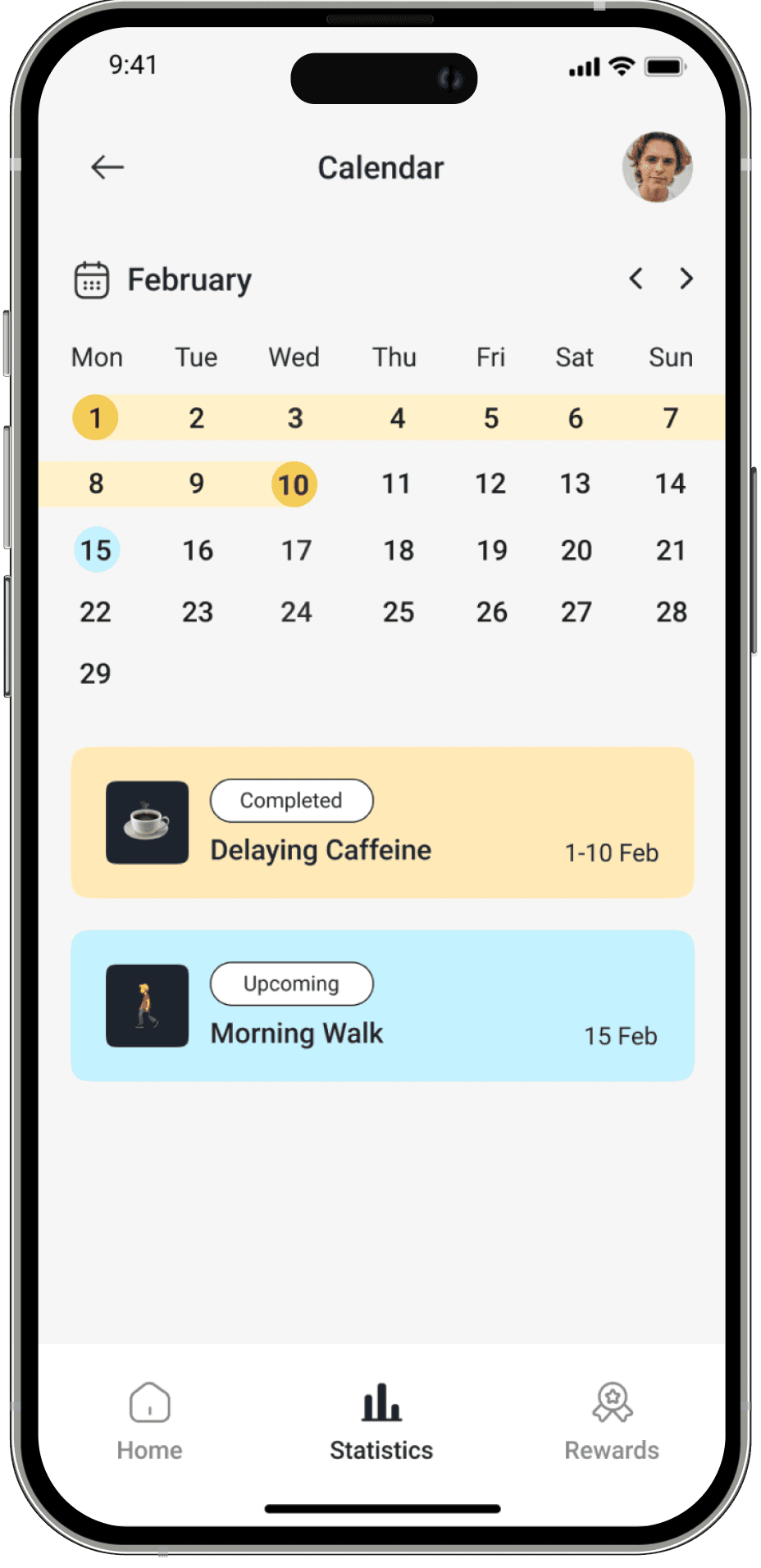
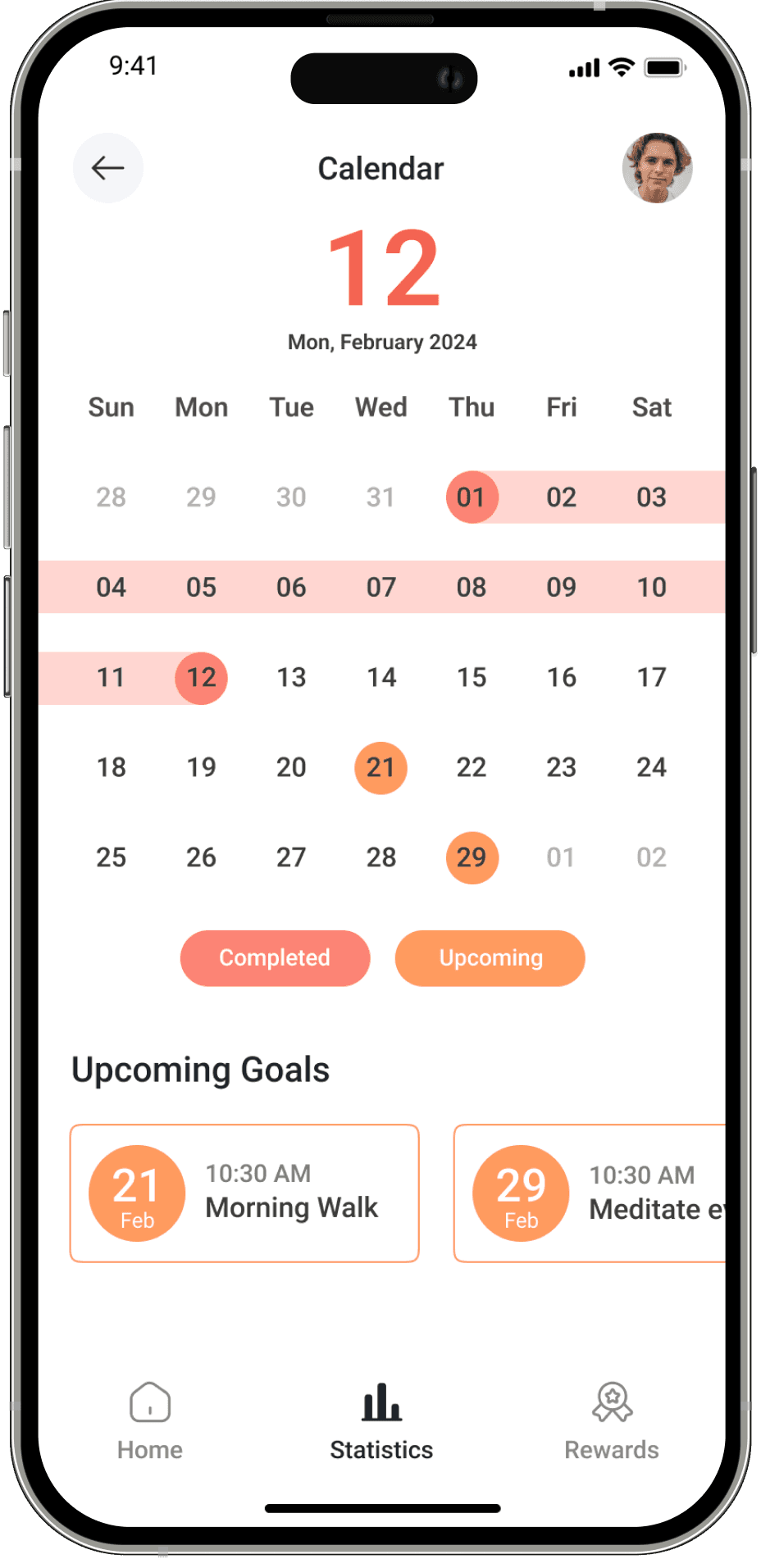
Statistics showcasing completed, upcoming and ongoing goals.
Opens the app upon receiving a notification.
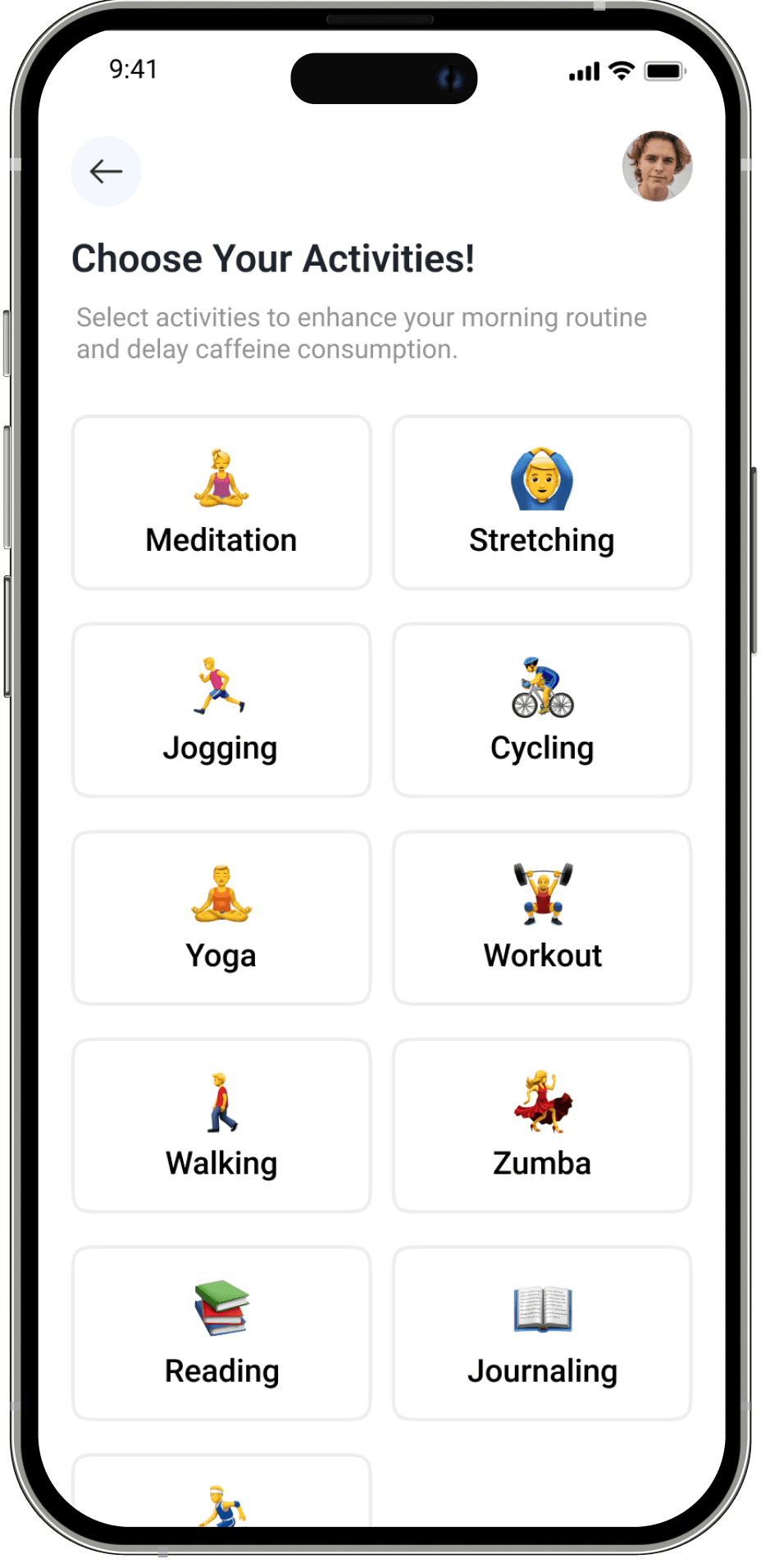
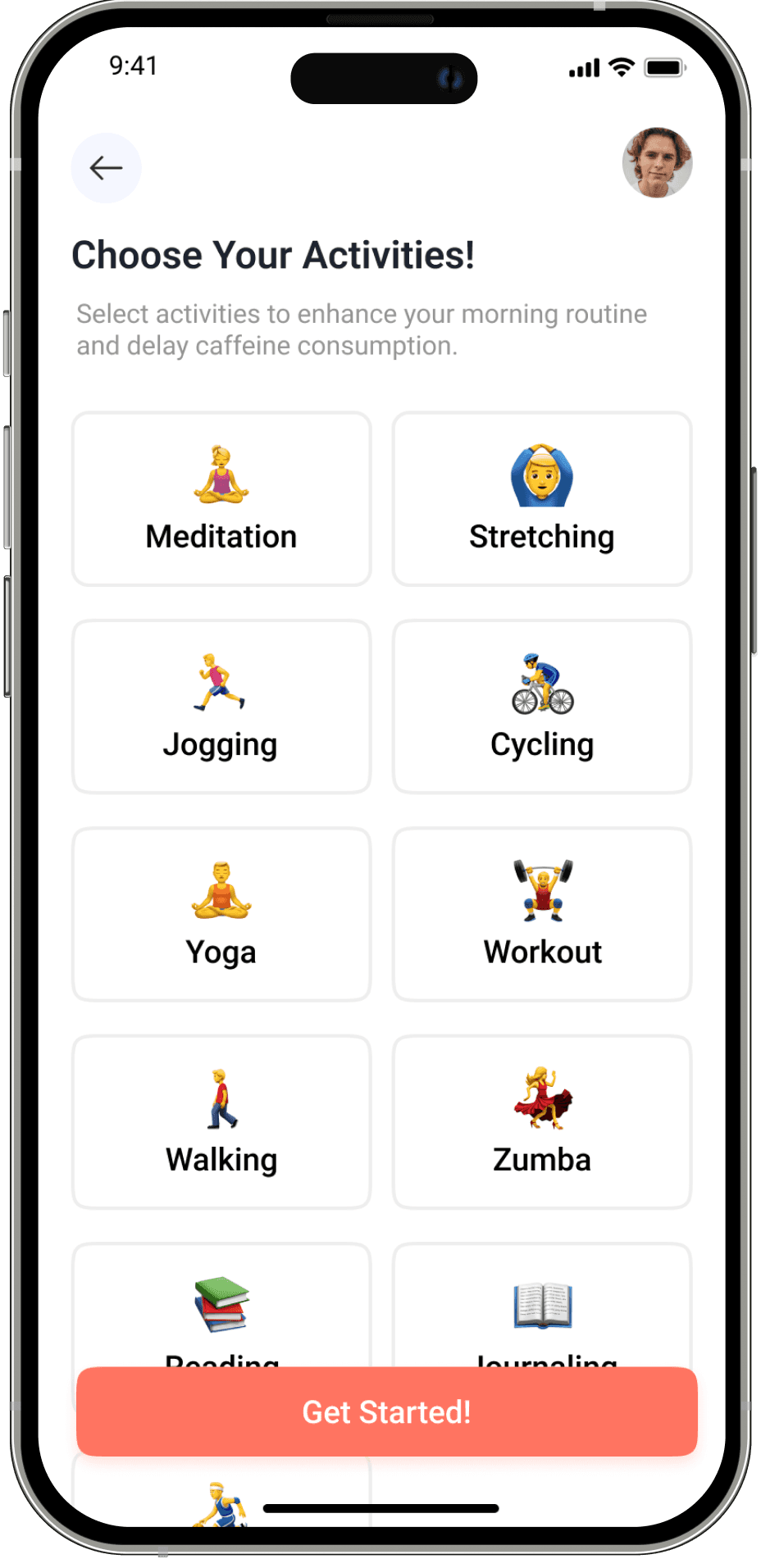
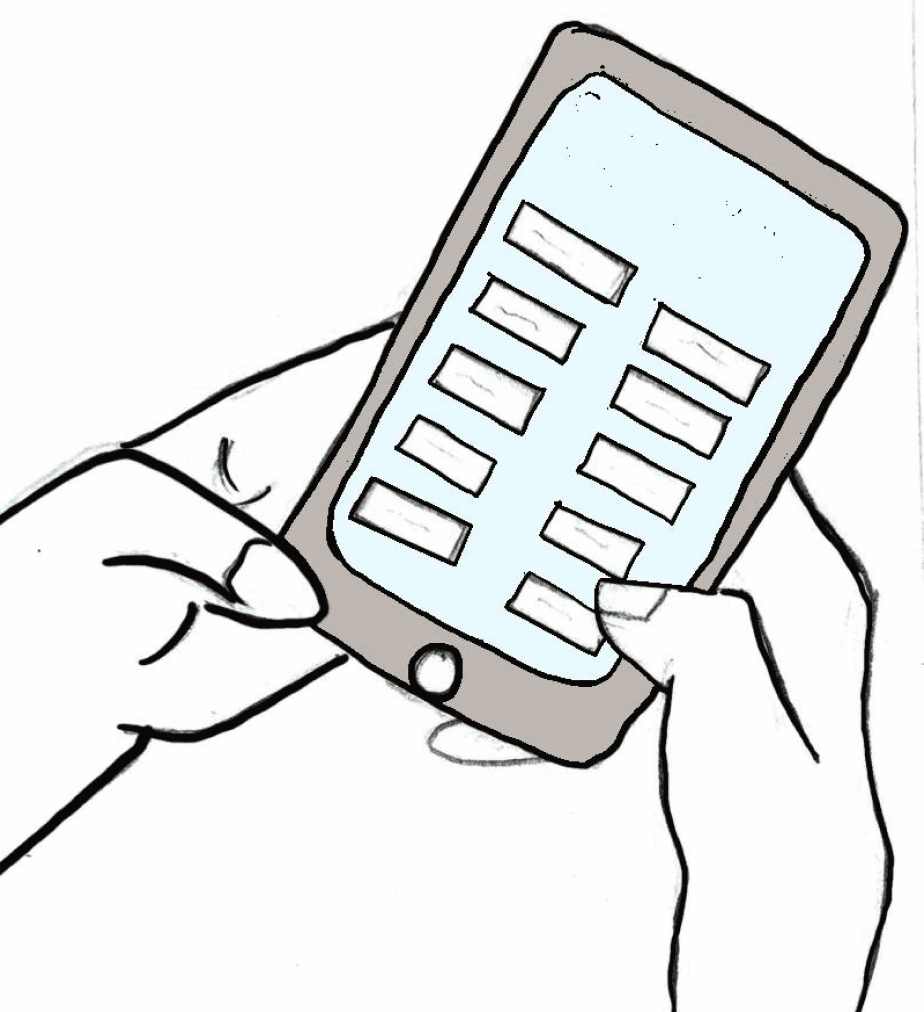
Chooses any desired activity to delay coffee.
Internal Triggers: Desire to improve overall health and wellness, internal motivation to maintain a delay streak.
Trigger
Investment
Action
Reward
Storyboard
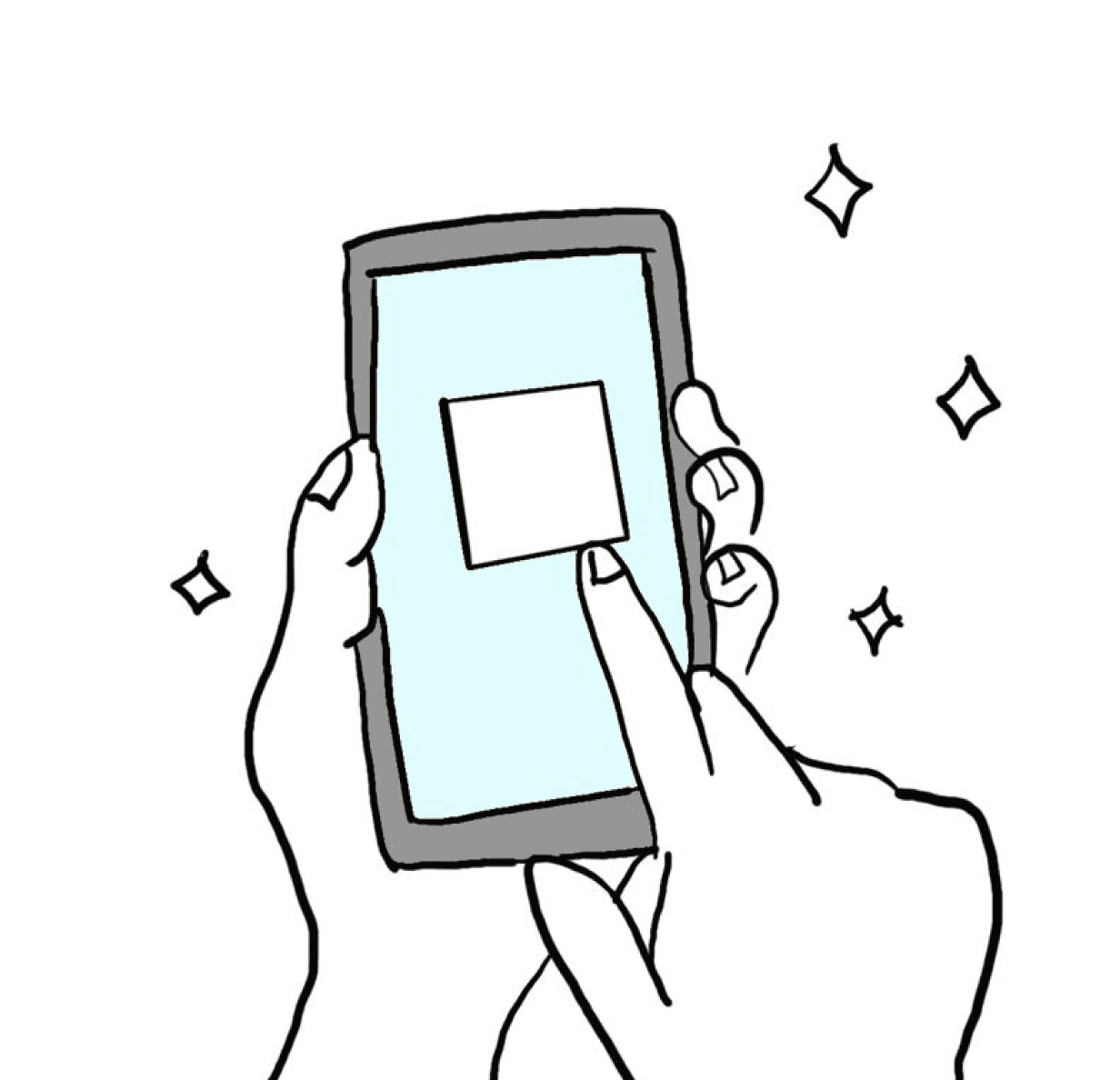
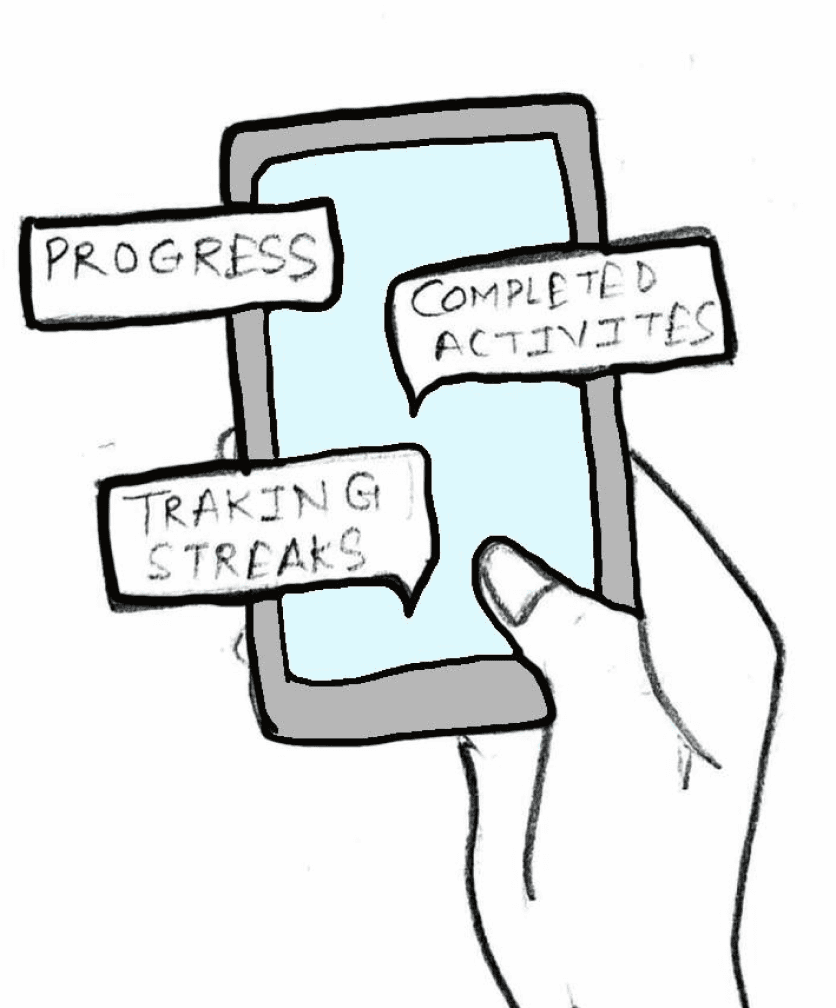
I created a storyboard that shows how users interact with the app, emphasizing the four core factors of habit formation: Trigger, Action, Reward, and Investment. Each frame of the storyboard captures one of these stages, providing a visual representation of the user’s journey, ensuring the app's design actively encourages habit formation.

Scope
Kano Cards
Kano cards help categorize features based on their impact on user satisfaction. People respond to different aspects of a product or service, experiencing varying degrees of delight, satisfaction, or frustration. The Kano Model cleverly breaks down these reactions into distinct categories: Delighters, Performance, and Basic Needs.
I created a set of 22 Kano cards capturing the app's potential features, to place on the MoSCow board. Here are the four main cards based on the app’s requirement.
Daily Activity/Goal Notification
Description
Users receive daily notifications reminding them of their wellness goals and encouraging them to engage with the app. They help the users to stay on track with their health and wellness journey.
03
T
Basic
Performance
Delighter
T - Trigger
Activity Selection
Description
The activity selection menu presents users with a range of options to choose from, to tailor their morning routine according to their preferences and needs , that helps them delay caffeine
04
A
Basic
Performance
Delighter
A - Action
Scratch Cards
Description
Rewards based on the users performance and progress, motivating them to consistently participate and explore different aspects of the app.
06
R
Basic
Performance
Delighter
R - Reward
Progress Tracker
Description
The progress tracker monitor streaks, completed activities, empowering the users to stay motivated and accountable.
07
I
Basic
Performance
Delighter
I - Investment
MoSCow Method
Next, I applied the MoSCoW Methodology to prioritize the features, categorizing them into Must Have, Should Have, Could Have, and Won't Have. This structured approach provided a clear framework for prioritizing features and establishing a solid foundation for the entire project.
Structure
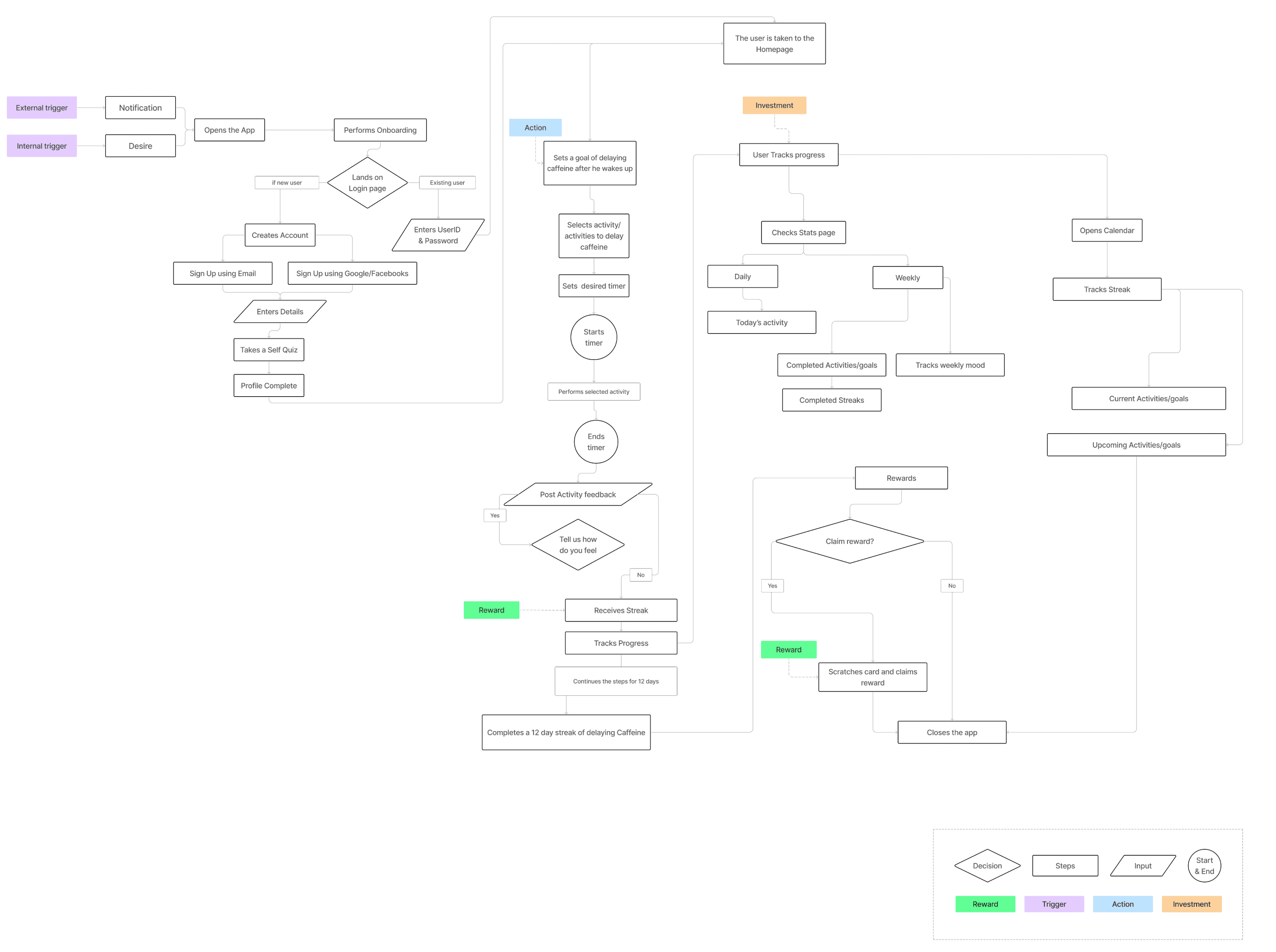
User Flow
Based on the ideas and features in my project, it was important to understand how the user would interact with the application.
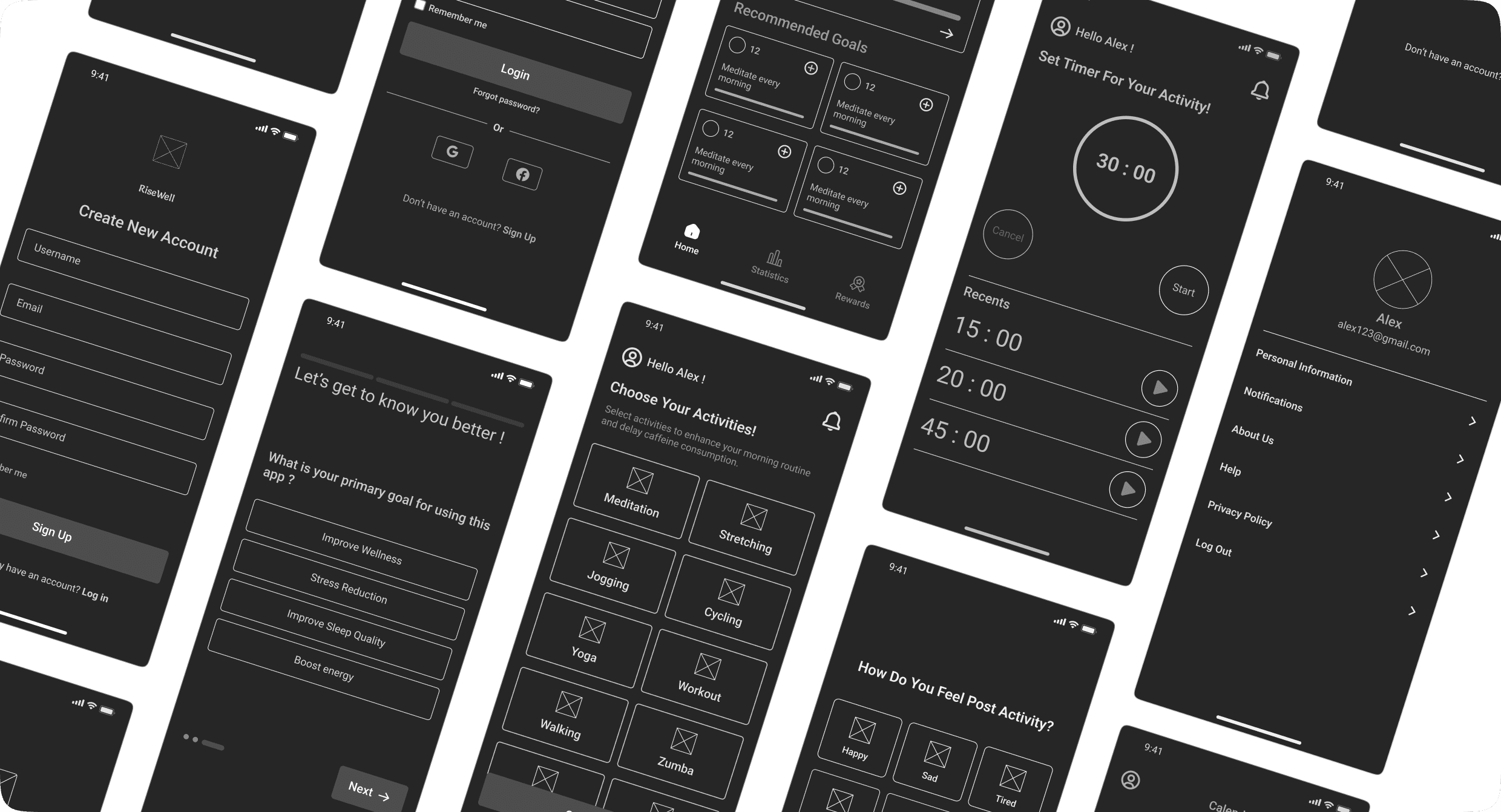
Digital Wireframes
Skeleton
Style Guide







Surface
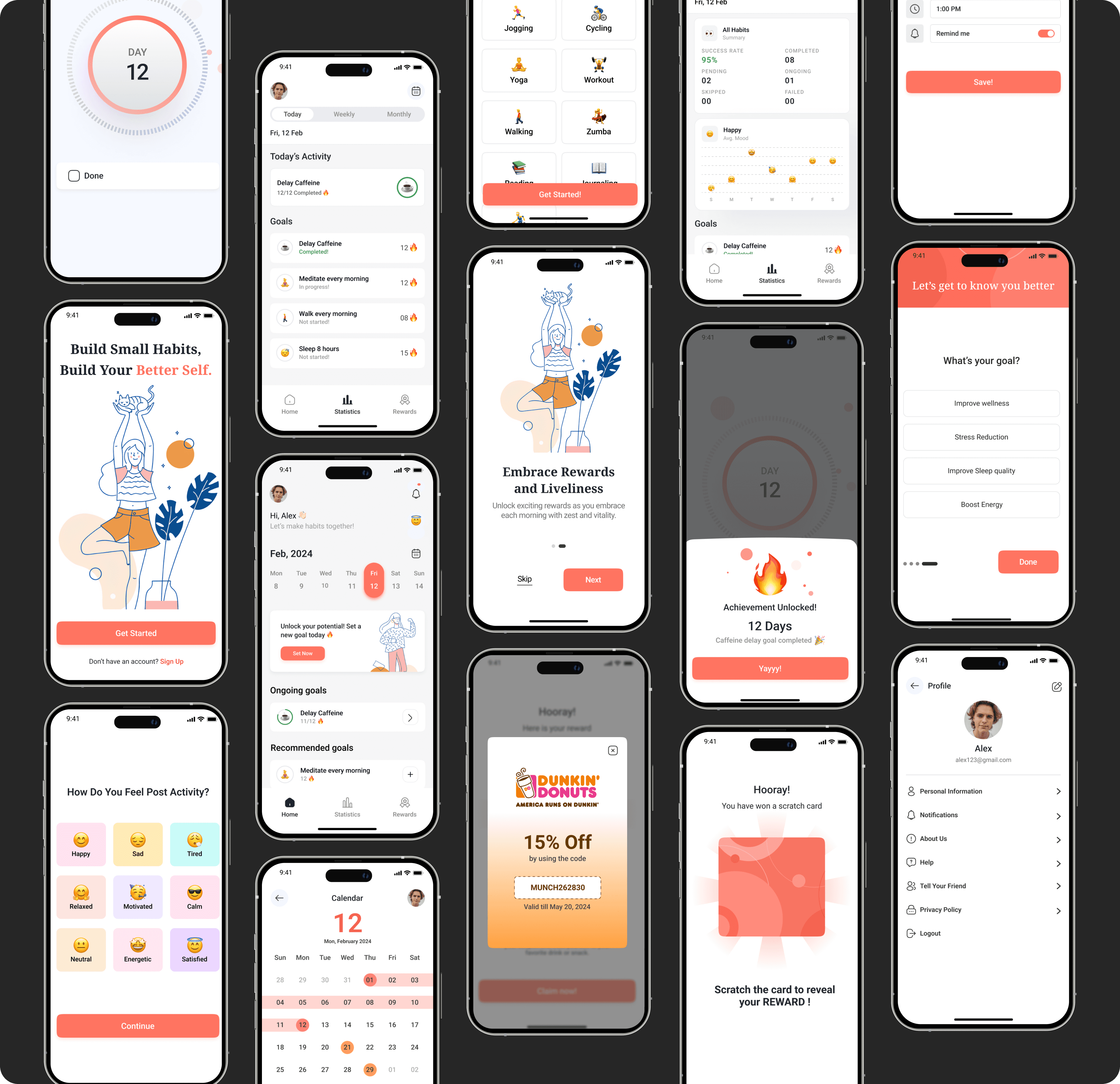
User Interface
Usability Testing
To ensure RiseWell’s effectiveness to help users effectively manage their caffeine intake and prioritize well-being, I conducted usability testing.
This crucial step focused on three key objectives:
Evaluate users' first impressions of the RiseWell interface.
Assess how easily users navigate the app's overall flow.
Uncover any pain points users encounter while following typical workflows within the RiseWell app.
User Screening
Usability testing participants were recruited through a screening survey. Out of the 32 individuals who completed the screener form, 20 expressed interest in participating in the usability testing, and 5 people gave the test.
I primarily focused on selecting users based on two criteria:
People who regularly consume coffee in the morning and are interested in managing or reducing their caffeine intake.
People who are open to using apps to support their health and wellness goals.
Usability Testing - Results
Most of the tasks performed by the users were successful. Users were happy with the app's ease of use and clear interface. They liked the core concept of delaying caffeine intake and appreciated features like the activity selection and progress tracking.
Overall, usability testing provided a clear picture of user needs and frustrations. This allowed me to refine the app's functionality and navigation, leading to a more intuitive and enjoyable user experience.
98.4%
Task Success
96.2%
Confidence Score
96.4%
Ease Score
Prioritizing Usability Findings
To prioritize usability issues identified during testing I utilized a Severity Matrix. It helped me determine which problems require the most immediate attention based on their impact and frequency. In this Diagram the y-axis showcases how many participants faced the issue and the x-axis showcases severity of the issue